Maple Worker
AI-driven healthcare shift scheduling app
- Company
- Maple
- Role
- Product Design Lead
- Timeline
- Six weeks, 2025
- Brand
- Research
- UX architecture
- Interface design
- Prototyping



The project
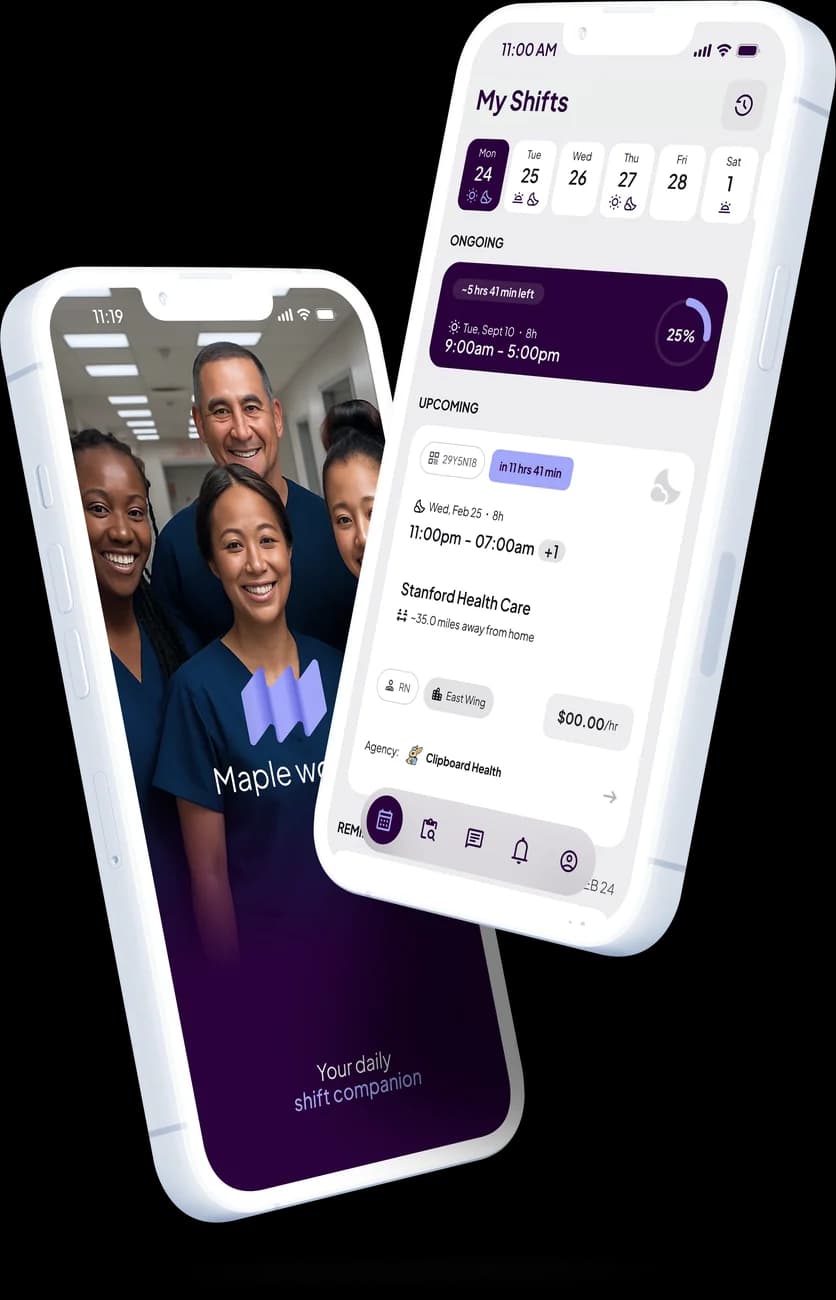
Clipboard Health partnered with Maple to explore AI-driven healthcare staffing. I led the design of Maple Worker, a shift scheduling platform for healthcare professionals, taken from concept to prototype as part of an experimental suite alongside Maple Care and Maple Scribe.
The problem
Healthcare facilities face persistent staffing shortages and scheduling inefficiencies. I analyzed the workflows of the nurses, CNAs and caregivers who fill their shifts, and four pain points stood out. The app’s onboarding answers each one in a slide.
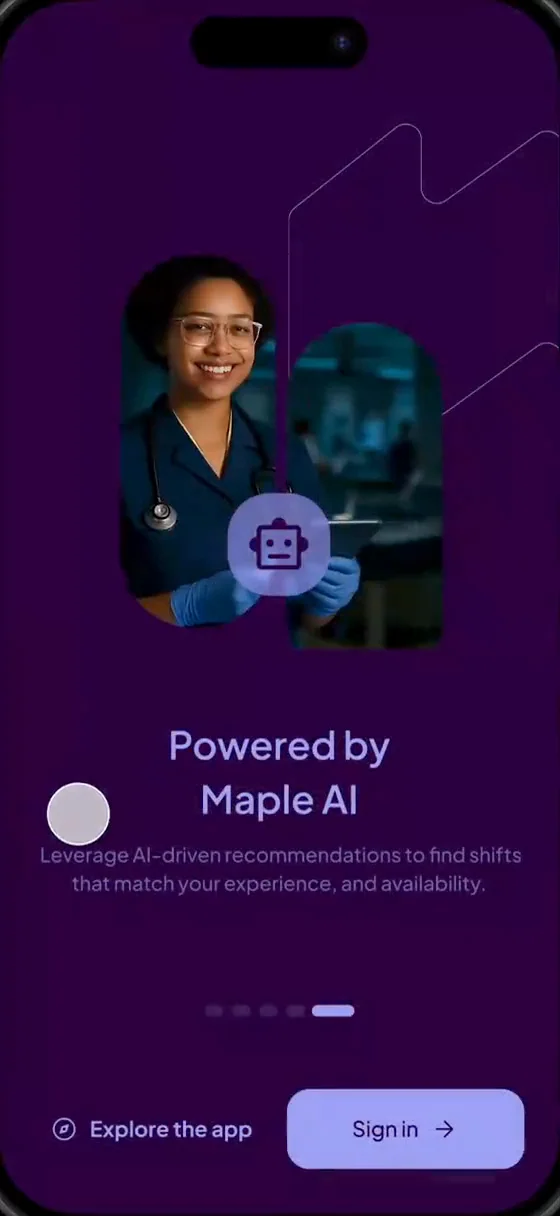
- 01See how it was solvedFinding shifts that match their credentials takes too long.Onboarding: Powered by Maple AI
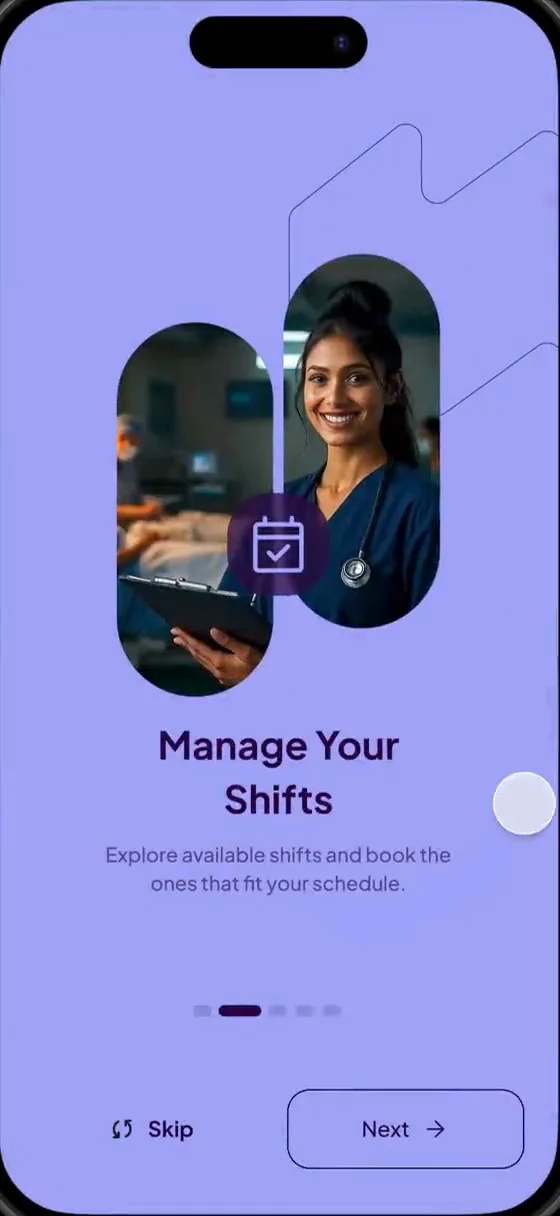
- 02See how it was solvedSchedules conflict, and shifts are hard to keep track of.Onboarding: Manage your shifts
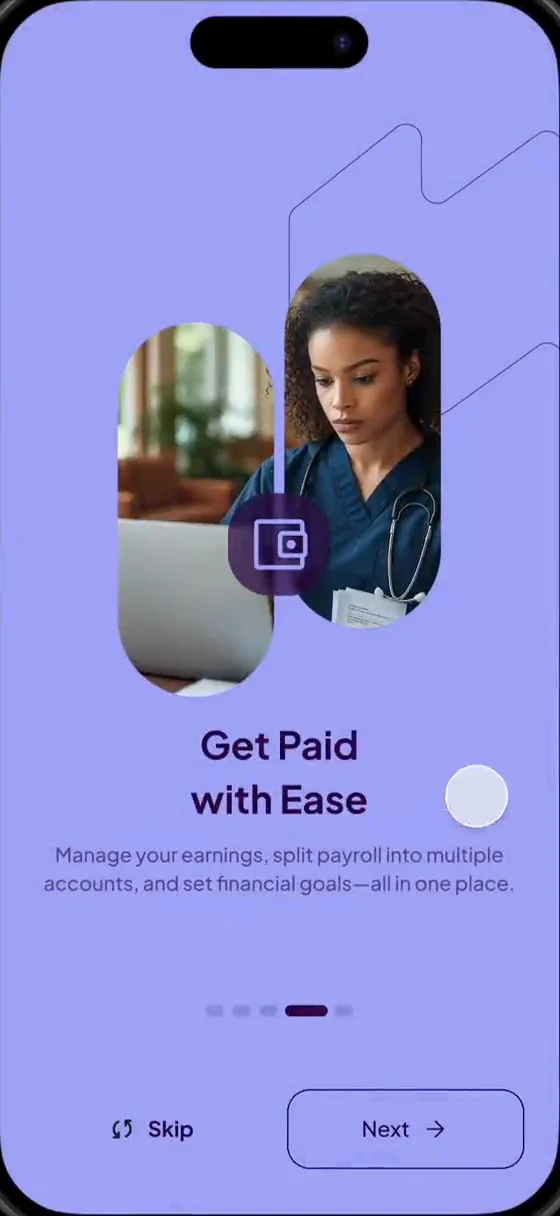
- 03See how it was solvedPay is opaque: it is hard to see what they earn.Onboarding: Get paid with ease
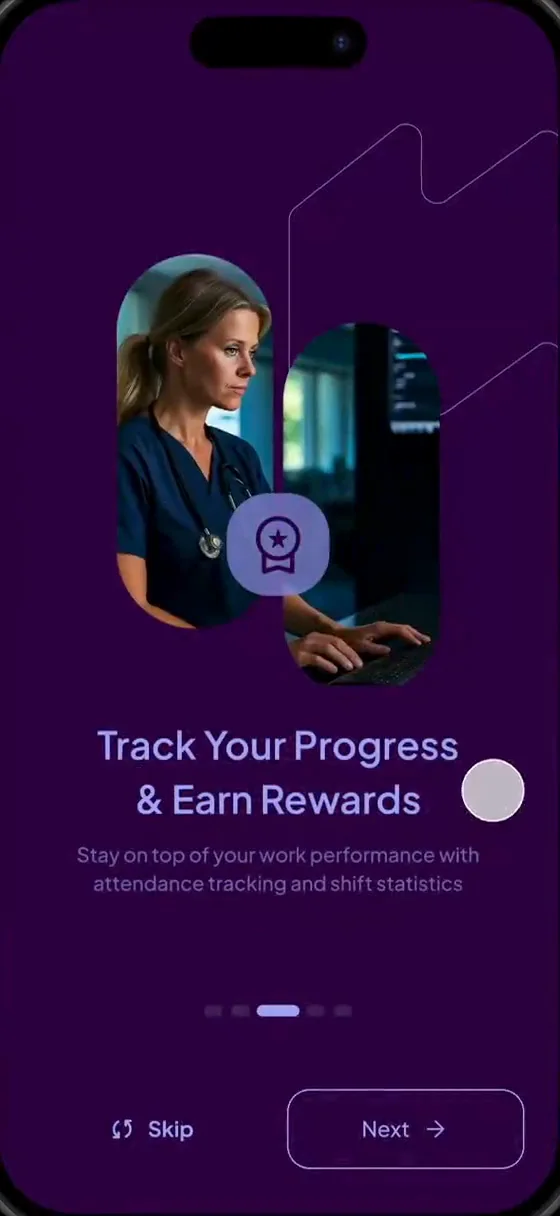
- 04See how it was solvedGood work goes unrecognized.Onboarding: Track your progress & earn rewards
How I solved it
One place to run their working life: intelligent shift matching plus the tools to manage schedules, recognition and pay. The recordings come from the interactive prototype of the worker app; its people, facilities and amounts are sample data.
01
Shifts matched to your credentials
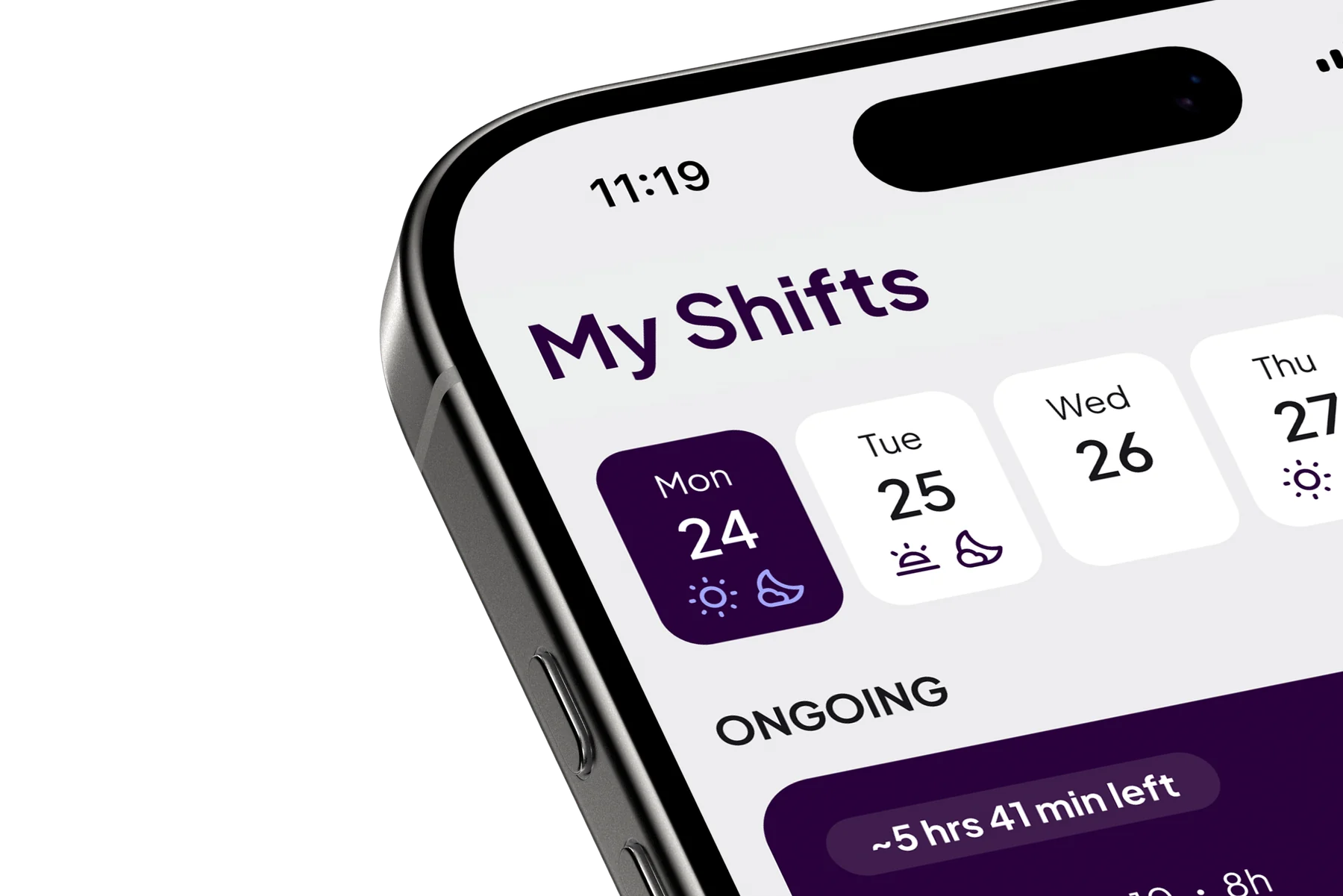
Find shifts opens on the week, each date marked for day, evening or night shifts. Every card shows the credential it calls for (RN), the unit, the facility, the distance and the pay per hour.
02
Booking and tracking shifts in real time
Date and hours, the credential and unit, a note from the facility, the agency, and the pay: per hour, in total, with Instant Pay.
03
Earnings in plain sight
The account opens on the financial goal: $6,500, 43% reached, $1,936 earned and $4,564 still missing, which the app turns into 92 hours of work.
04
Recognition for the work
The account adds it up: 512 XP, the latest achievements and a 4.3 rating from 27 reviews.
The system behind it
Palette
- Lilac#A2A6FAAI suggestions, countdowns and XP
- Plum#2A013CPrimary actions, the selected day and the ongoing shift
Shift marks
- Day7:00am – 3:00pm
- Evening3:00pm – 11:00pm
- Night11:00pm – 7:00am
- RewardsXP and badges
Outcomes & learnings
Changes at the startup kept the app from launching, but the project delivered:
- A complete interactive prototype of the worker app, validated through stakeholder and user feedback.
- Insights into how healthcare workers value pay transparency and recognition.
- A design system ready to scale across the Maple suite.
What I learned
Money is easier to plan in hours: the goal shows what is still missing as hours of work.
Recognition means more when it can be lost: cancelling a booked shift costs XP, and the app says why.
Plans change, so a booked shift needs a way out that still covers the facility: hand it to a coworker.
Research and prototype testing pointed to less time to fill shifts and better worker retention. The app never launched, so none of it was measured.