Maple Scribe
Voice-powered healthcare documentation
- Company
- Maple
- Role
- Product Design Lead
- Timeline
- Six weeks, 2025
- Research
- Voice UX
- Component system
- Interface design



The project
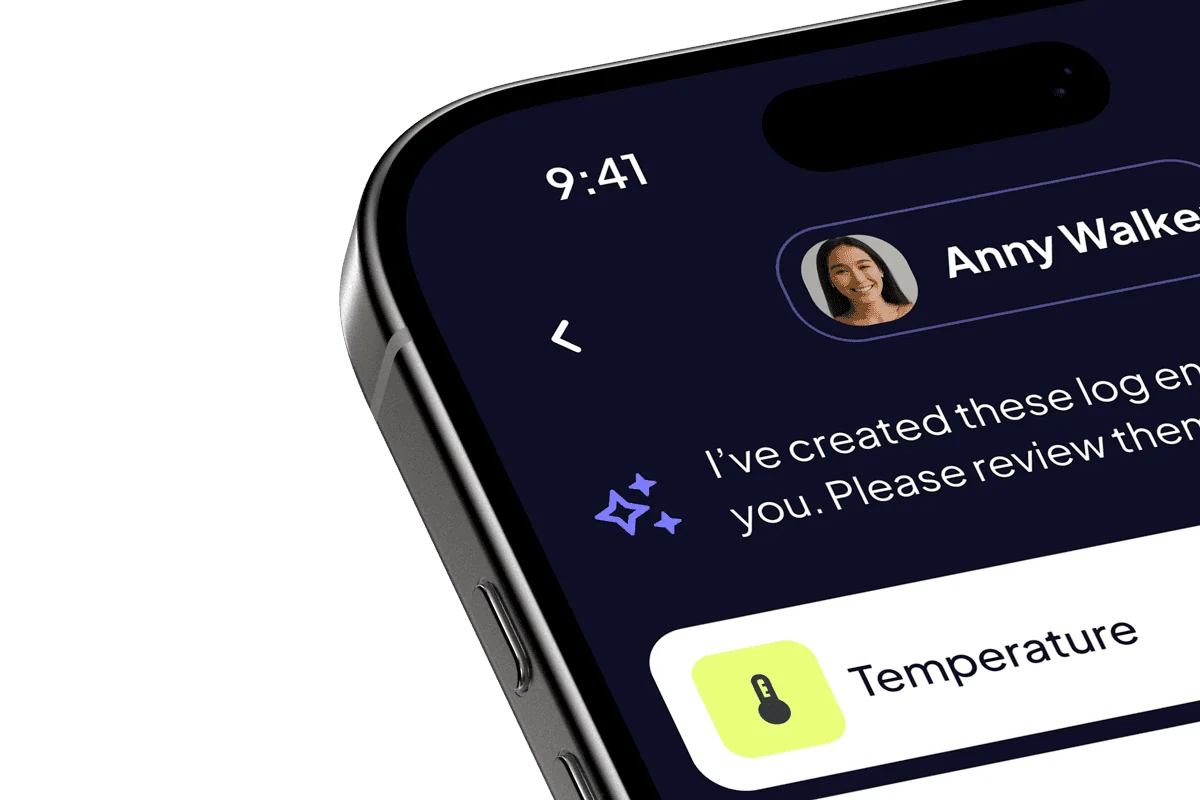
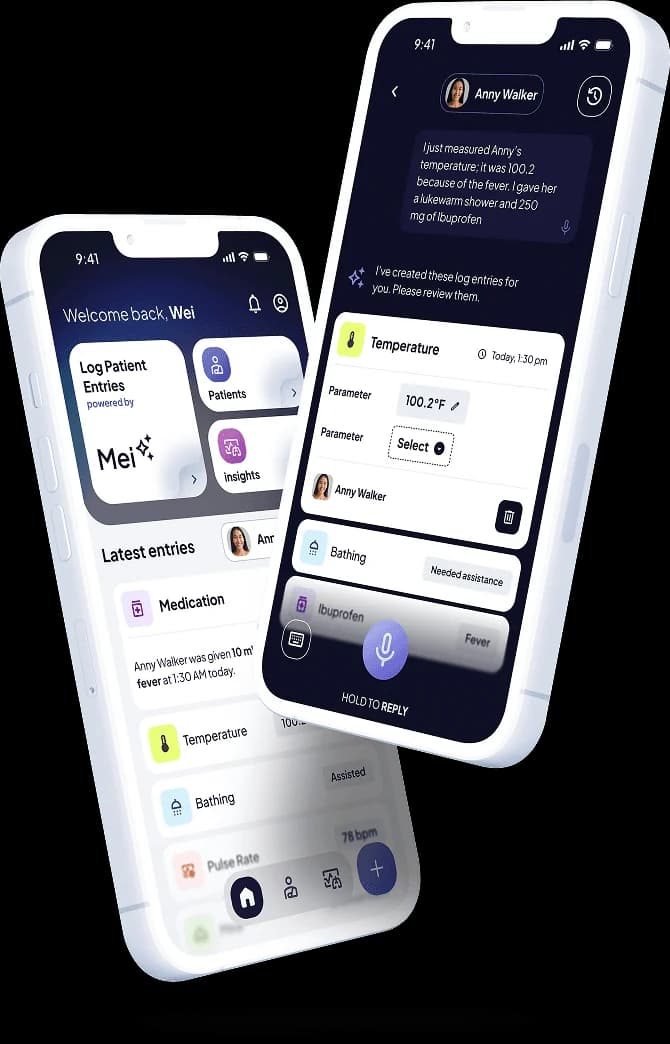
Maple Scribe completes the Maple suite: AI voice documentation for healthcare providers. As Product Design Lead, I designed a new approach to care records, where caregivers capture what happened by talking to Mei, an AI assistant, in plain language. I explored and prototyped the voice AI concepts, the entry type system and the full UI/UX framework before the project transitioned.
The problem
Healthcare documentation has to be fast, accurate and compliant, all at once, and it weighs on caregivers. I ran field studies with caregivers in assisted living, home care and hospitals.
- of a caregiver’s time can go to paperwork
- 40%
- core kinds of record, each with its own data
- 11
- 01Paperwork takes up to 40% of their time.See how it was solved
- 02Each of the 11 kinds of record has its own data.See how it was solved
- 03Speaking is not always an option: the setting or privacy can rule it out.See how it was solved
- 04Records have to be accurate and compliant, with no errors or missing information.See how it was solved
How I solved it
Voice documentation that takes paperwork off caregivers while keeping records complete and accurate. The screens are from the prototype; its caregiver and residents are sample data.
01
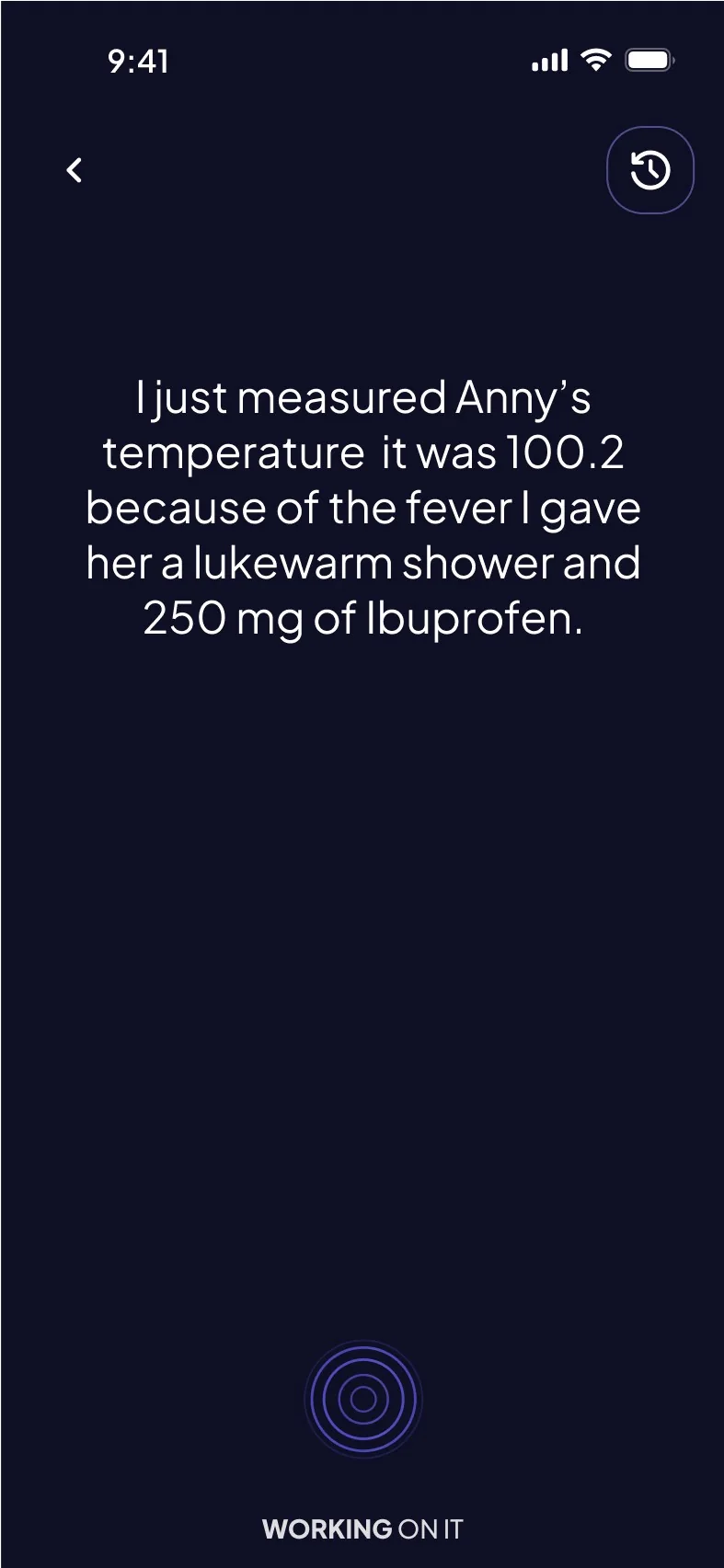
Log care by talking to Mei
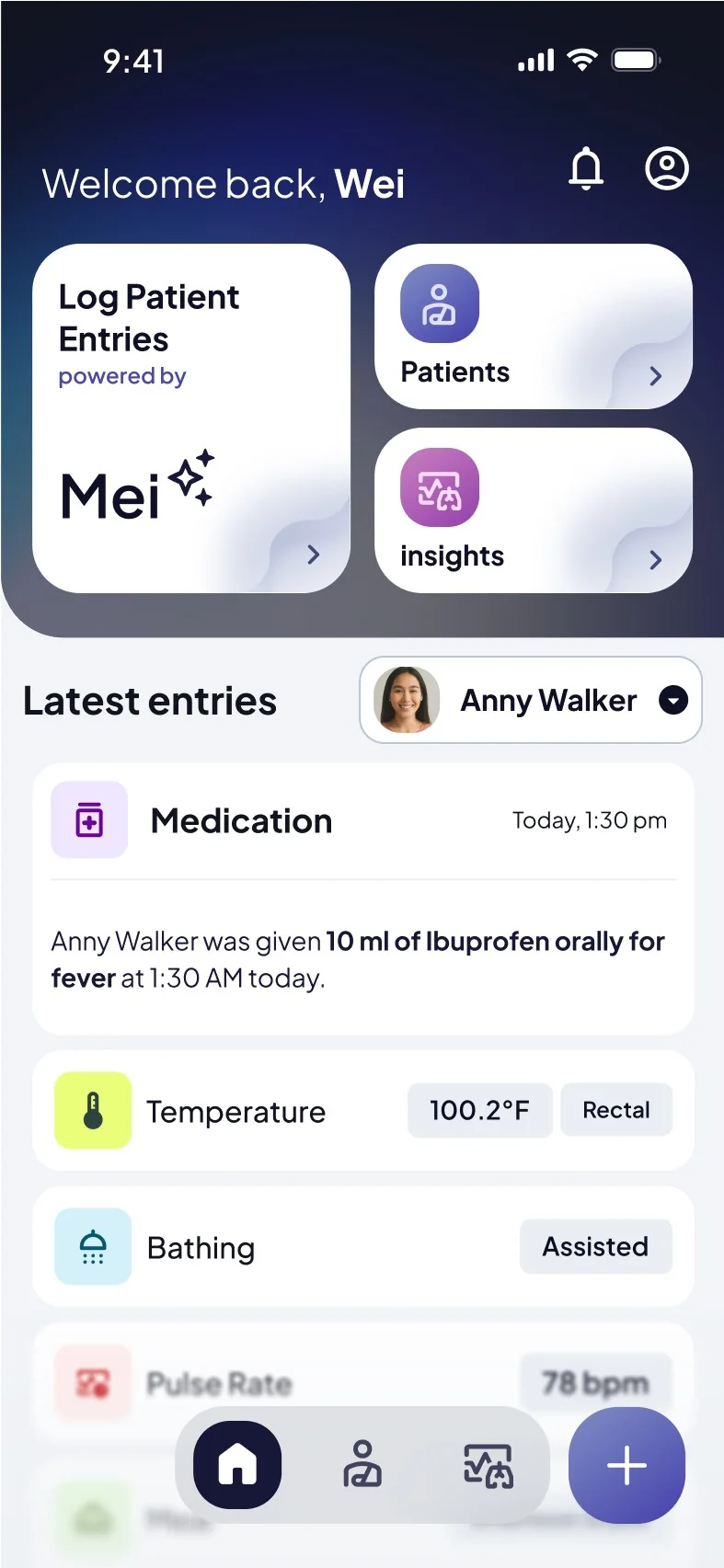
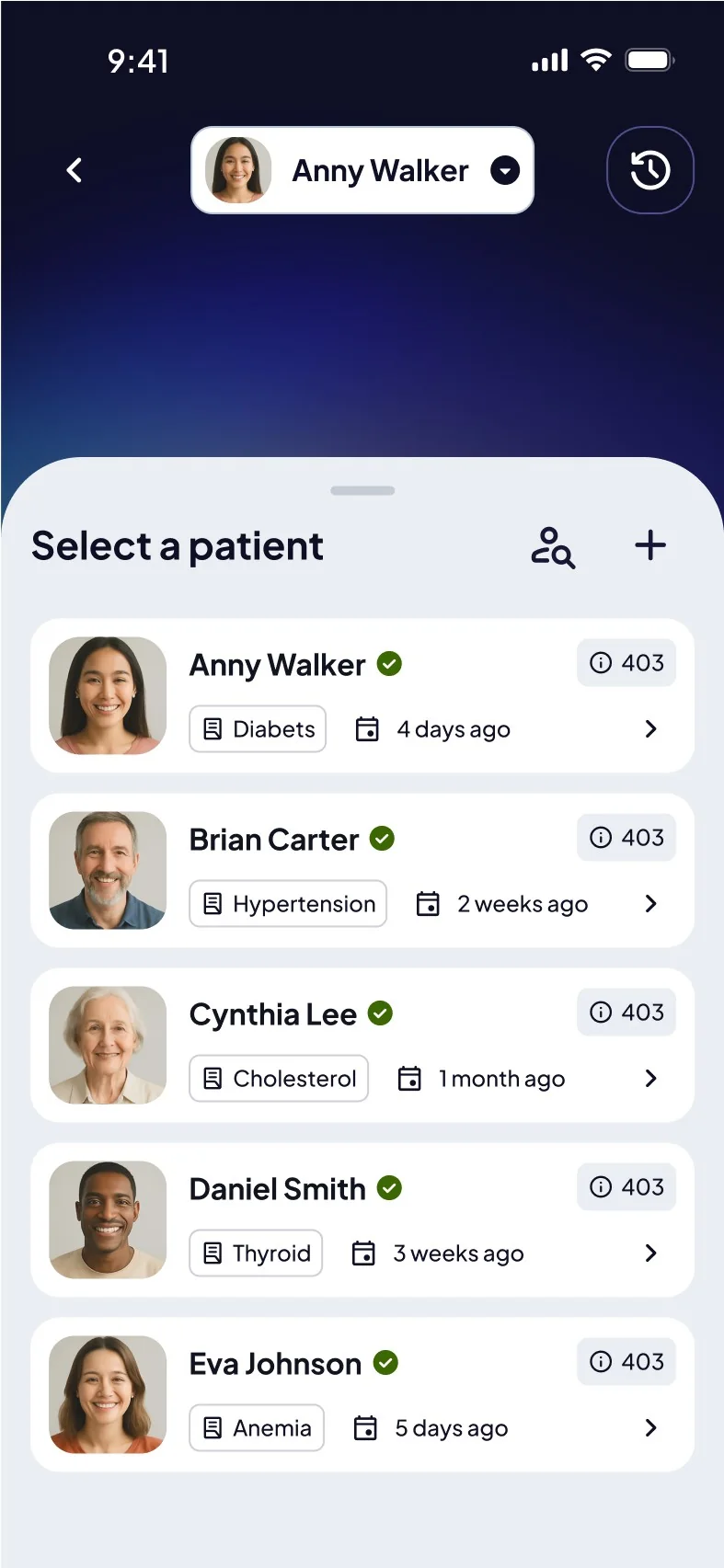
The latest entries for each resident, with Mei one tap away to log new ones.
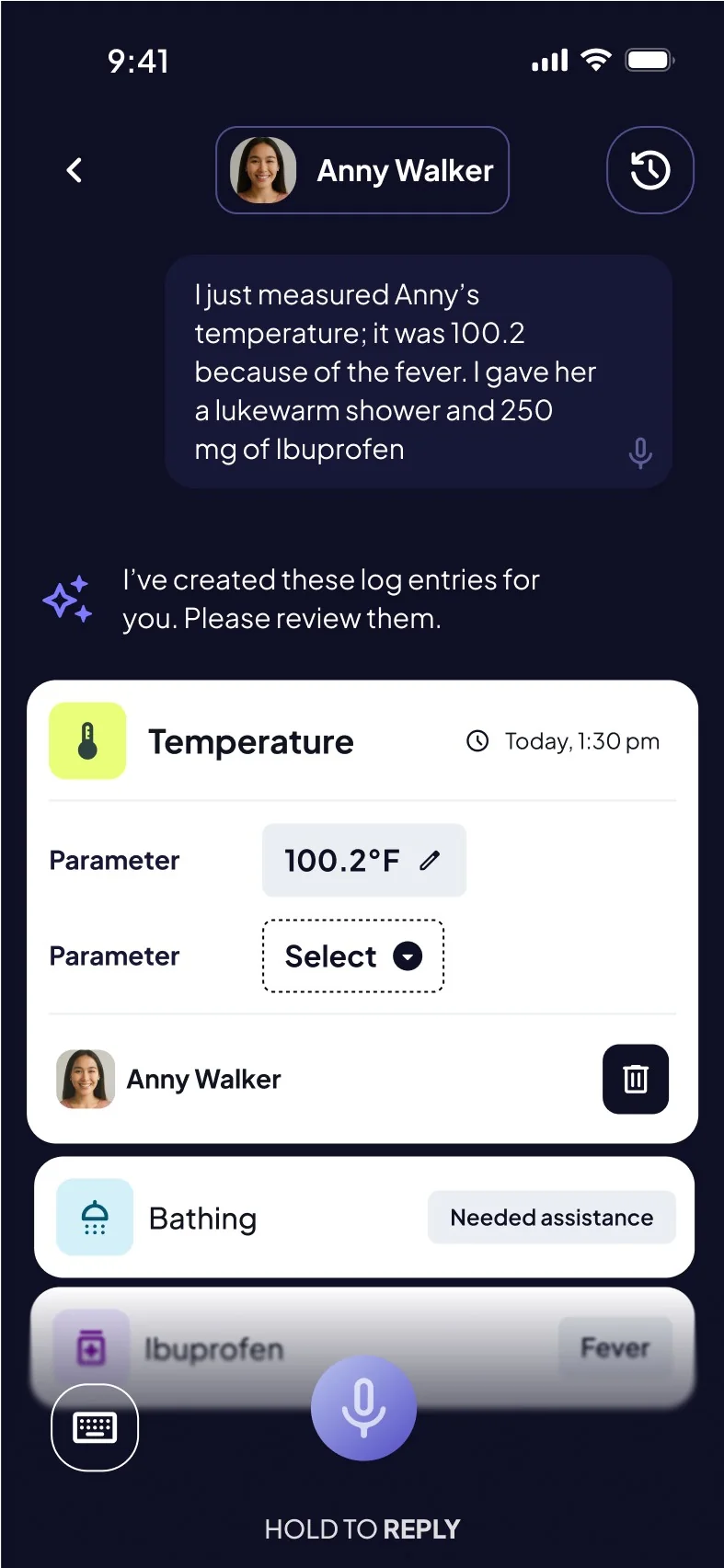
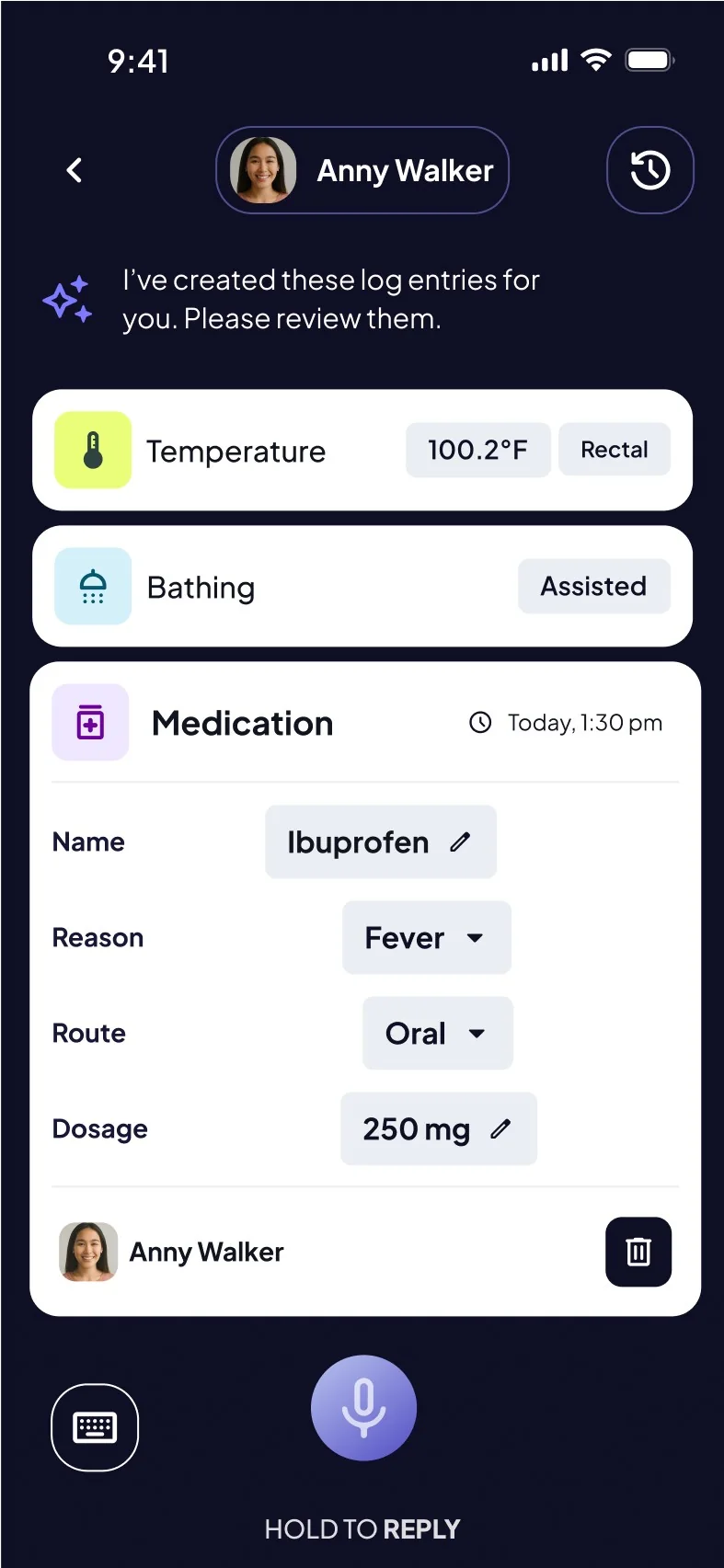
One sentence, three entries
02
One component per kind of entry
Bathing: one picker, the assistance level, from independent to refused help.
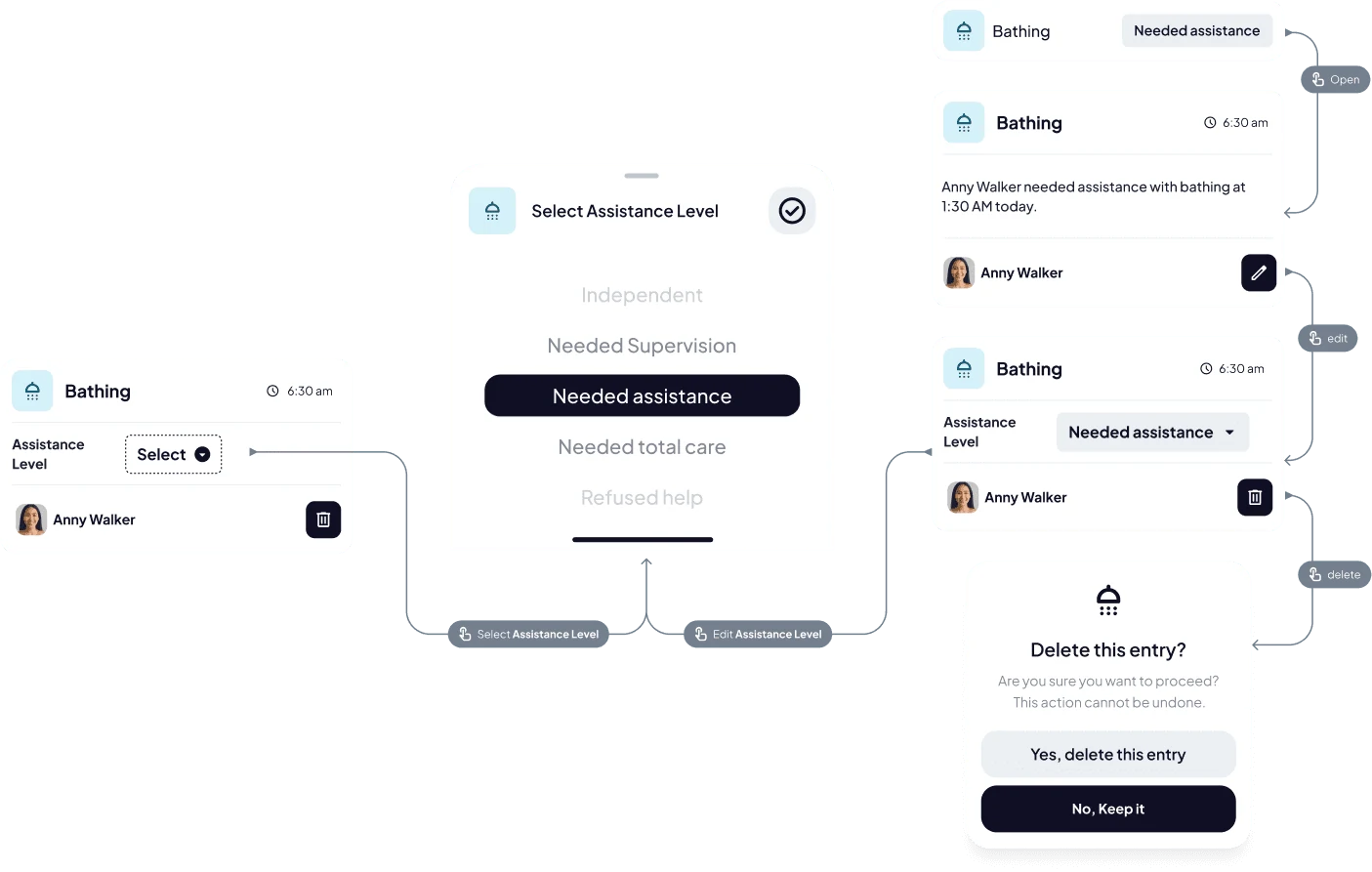
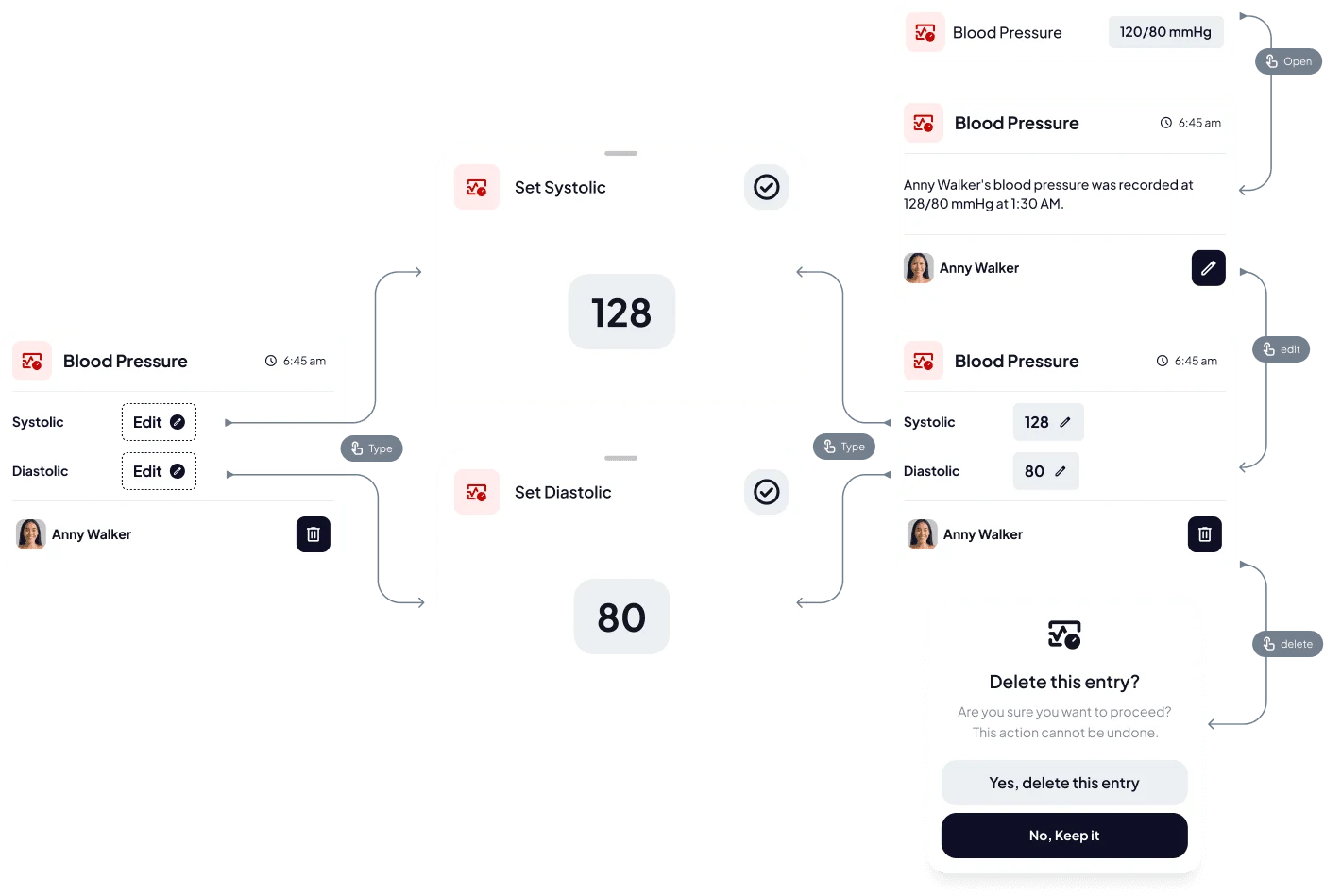
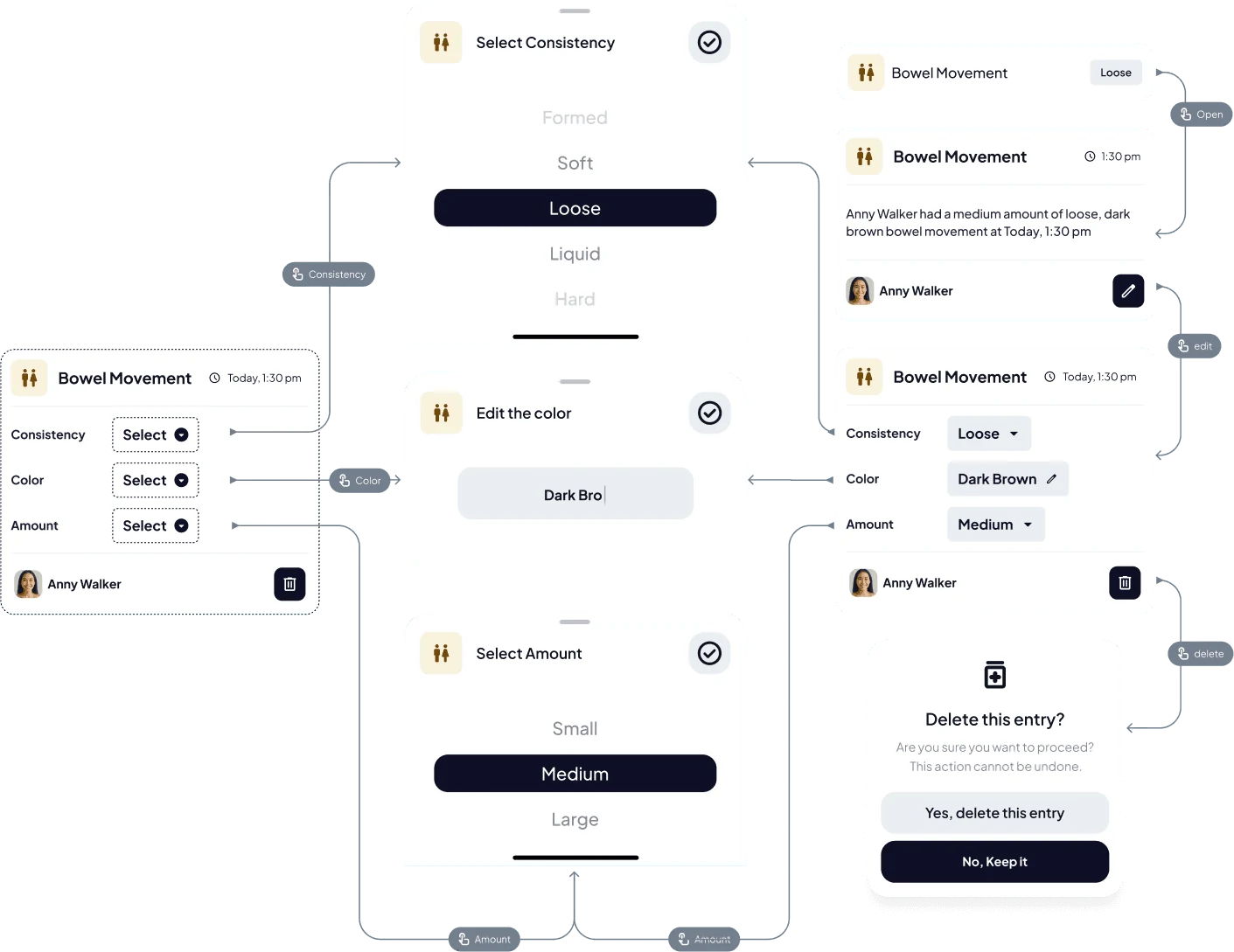
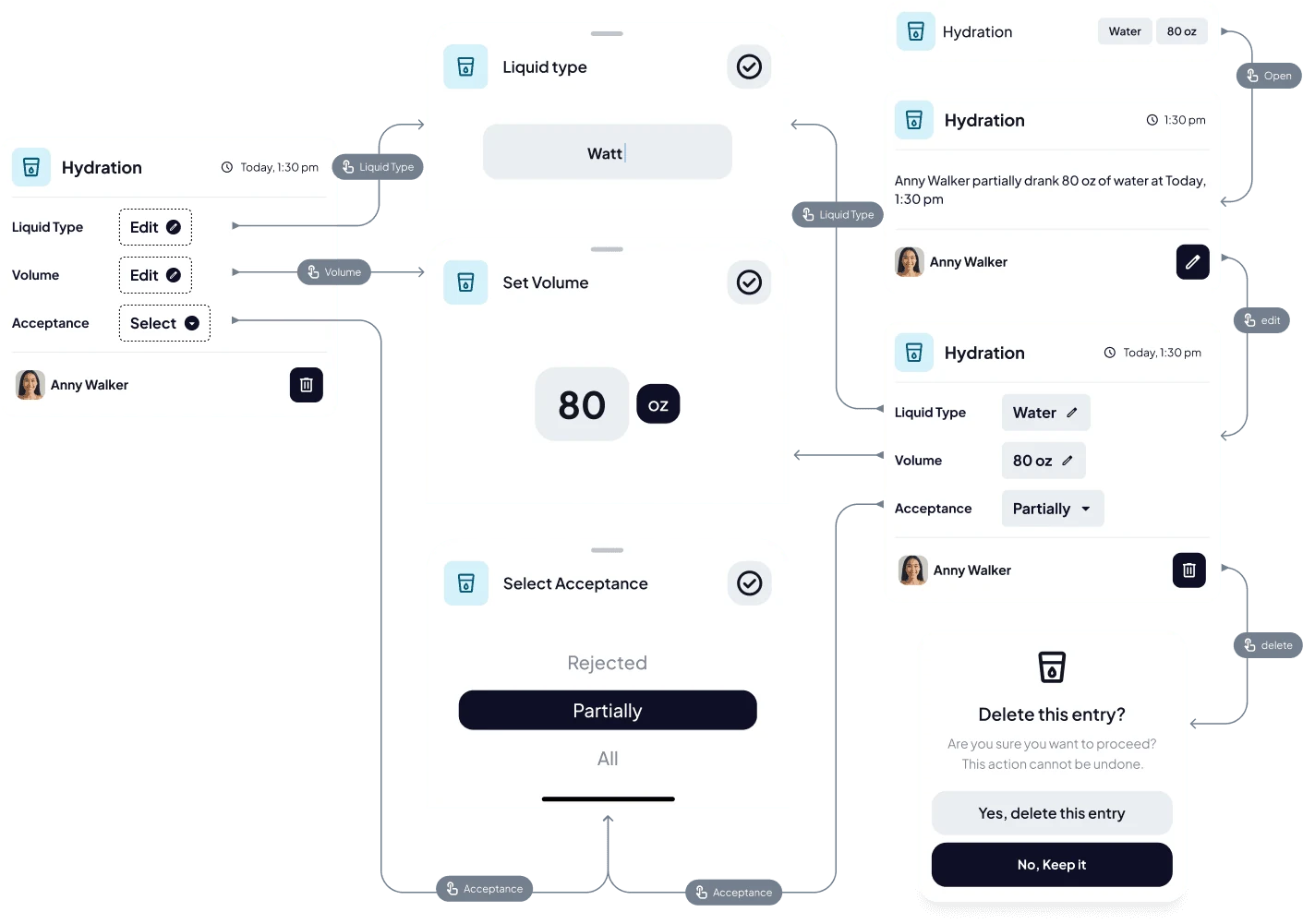
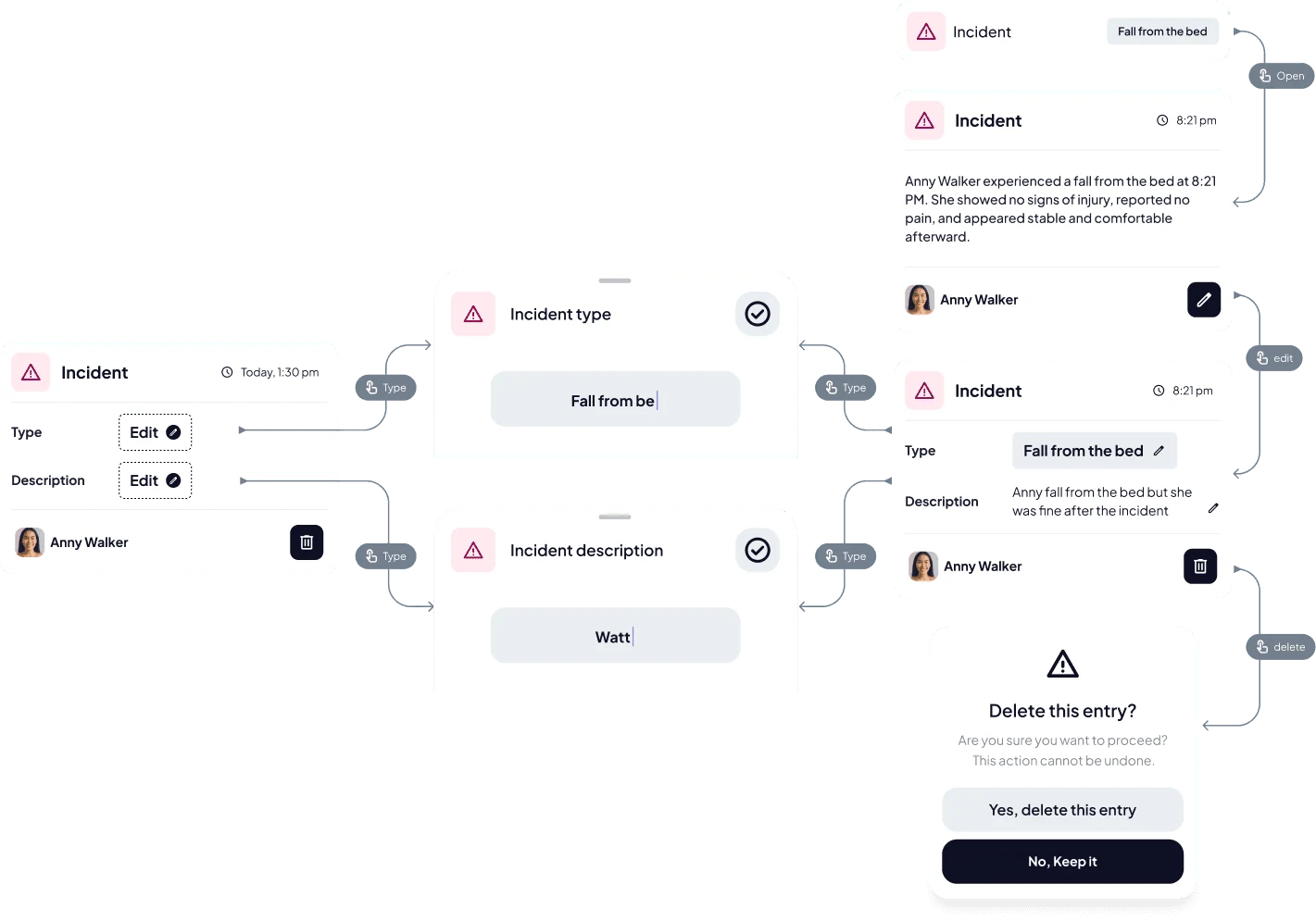
Scroll sideways to follow the flow
03
Voice, touch or both
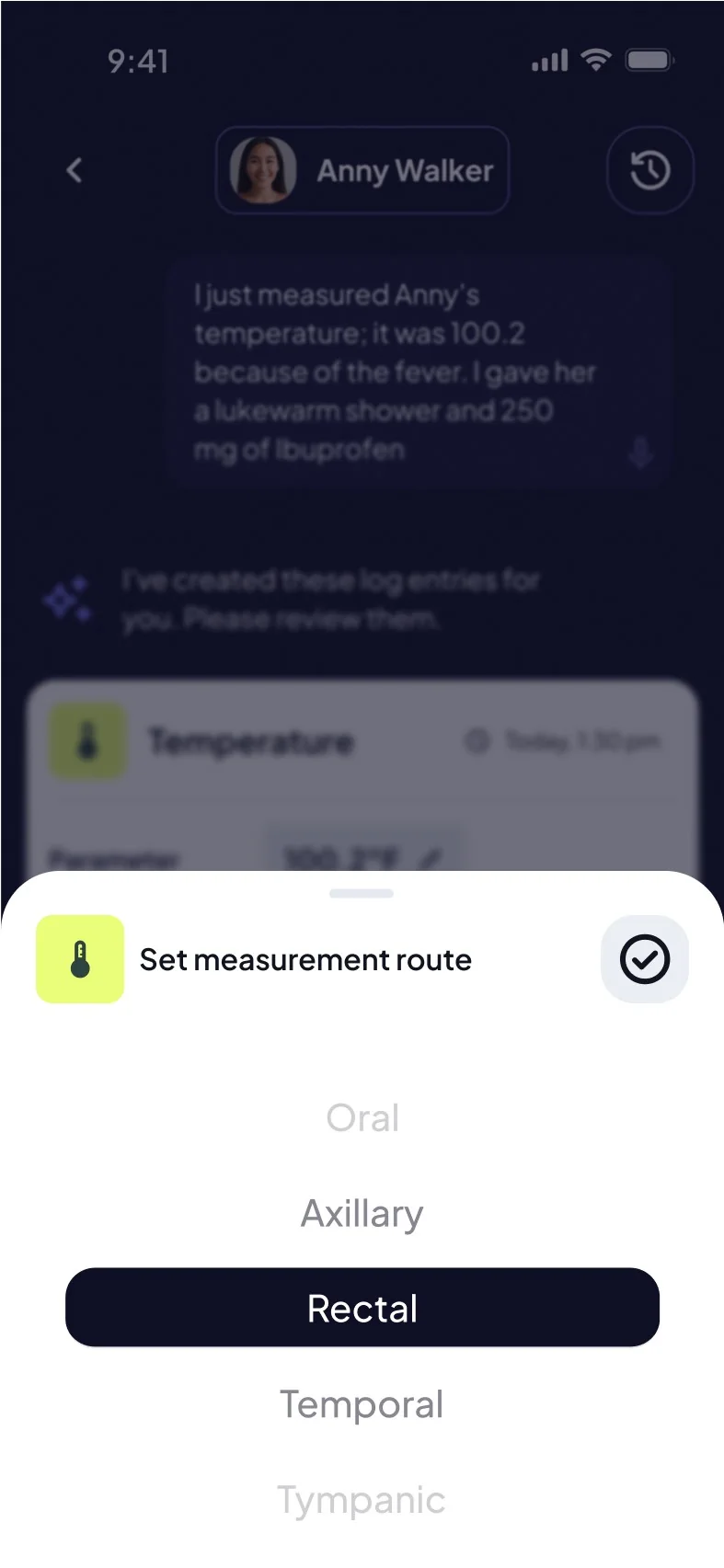
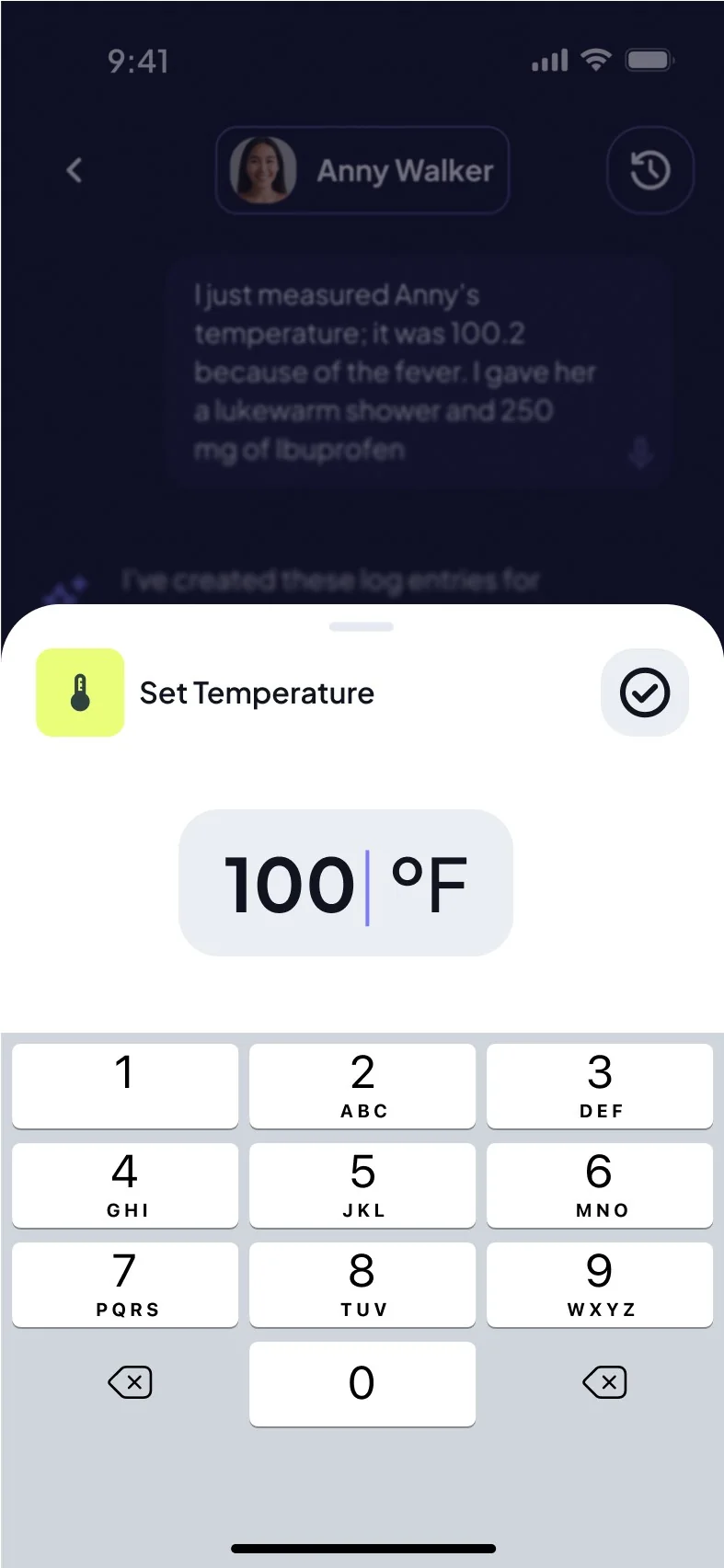
Nothing was said about the route, so the temperature entry waits on a dashed Select instead of a guess.
04
Checked before it goes on the record
Outcomes & learnings
The project transitioned before full implementation, but its design framework set the standard for voice documentation across the suite.
Projections, not measured
Voice entry was estimated to cut documentation time by 70% compared with traditional charting, potentially saving caregivers more than two hours per shift. Structured entries with validation rules were designed to raise documentation completeness by 85% and to cut errors with prompts and verification steps.
Scalable architecture
New entry types and care settings can be added without redesigning the core.
Influence
Voice-first principles from Scribe were adopted across the other Maple products, Maple Care’s AI assistant among them.
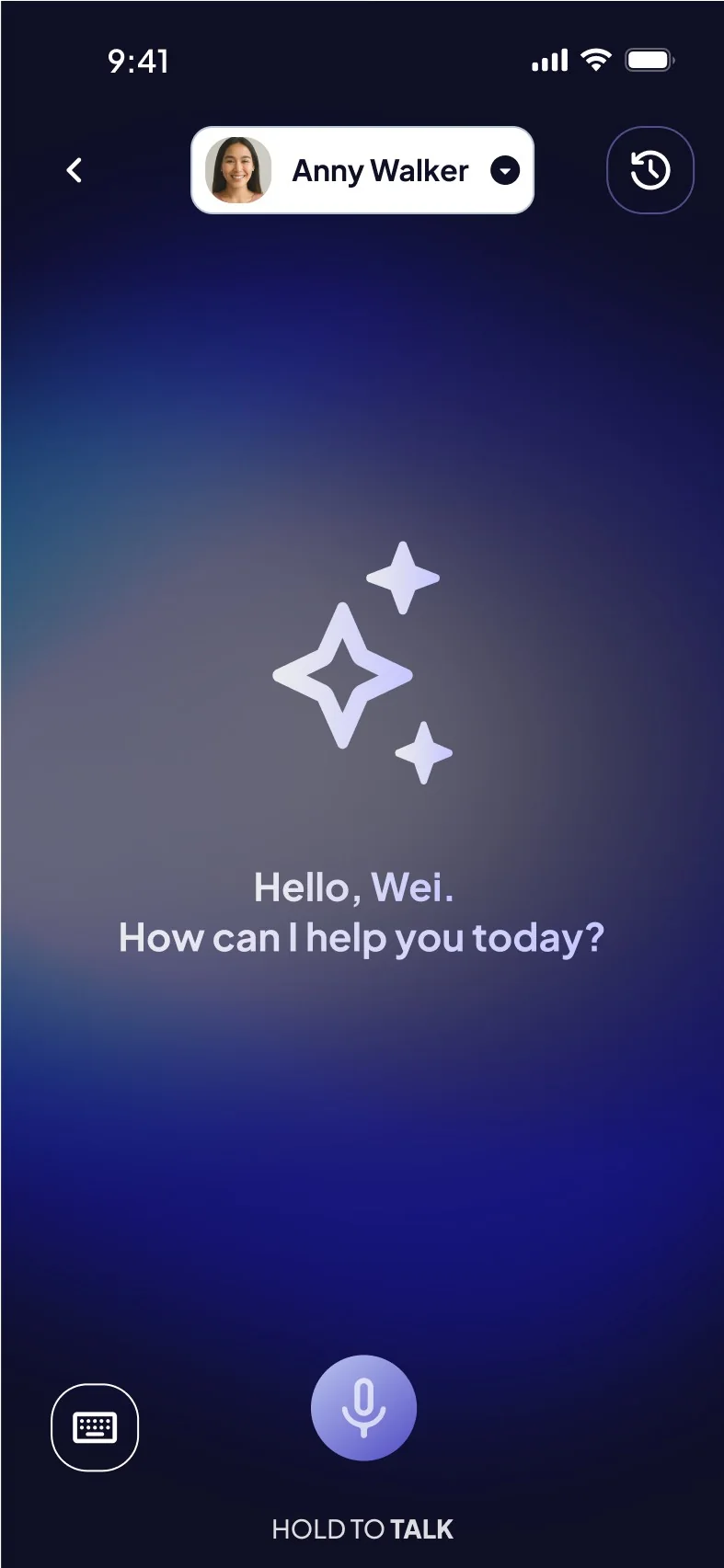
Maple Scribe: Ask Mei
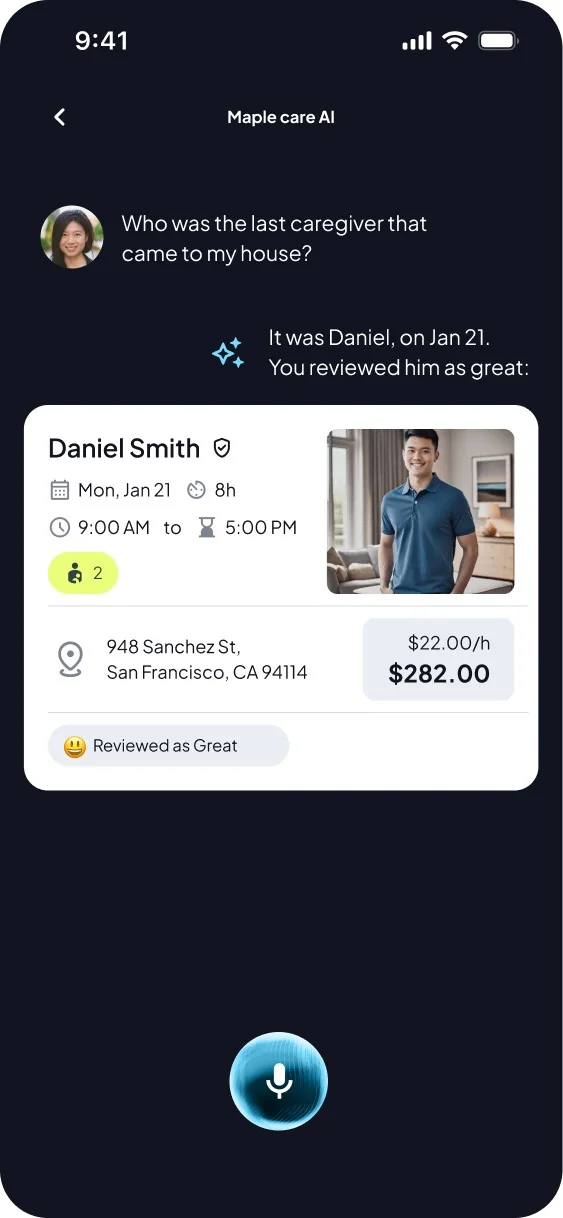
Maple Care: Ask AI